Health tips, latest disease, exercise, food habit, health tips, daily health tips, weight loss tips, medicine, latest health innovation, woman health, teen health, woman disease, fitness
An outbreak of the Zika virus has been confirmed in Florida, marking the first time the virus has been found to be transmitted via infected mosquitoes within the continental U.S.
The outbreak has infected at least four people, three men and one woman, through local transmission, Florida officials said today.
“This means Florida has become the first state in our nation to have local transmission of the Zika virus," Florida Gov. Rick Scott said today.
Scott said a small area in northern Miami that is about a square mile in size is the only area where the Zika virus is being transmitted from mosquitoes to people.
"We’re being very aggressive at testing people there we are testing the mosquitoes there and we spraying to make sure it’s contained," Scott said. He said health officials do not think that the transmission was ongoing.
The Florida Health Department has been giving Zika prevention kits to pregnant women in the affected area and warning residents to eliminate standing water to help cut down on the risk of mosquitoes breeding near them. The virus has been found to cause serious birth defects, including microcephaly, which is characterized by abnormally small head and brain, leading to significant developmental problems.
"We know this virus is most detrimental to expectant mothers," Scott said. "If you are pregnant or think you might become pregnant contact your OB/Gyn."
The state is working with the U.S. Centers of Disease Control and Prevention and the U.S. Department of Health and Human Services to monitor and combat the outbreak, Scott said. He expressed disappointment that Congress did not pass a bill to allocate funding to the CDC to prepare and combat the Zika virus.
"This is not just a Florida issue. This is a U.S. issue it is a national issue. We’re just the front of it," he said during a news conference.
More than 1,650 people have been diagnosed with Zika within the U.S., but the vast majority have been people who contracted the virus while abroad. A small number of people contracted the Zika virus through sexual transmission within the U.S.
IMAGE: ZIKA VIRUS INFECTS NUMEROUS PRIMARY CELL TYPES AND EXPLANTS OF THE HUMAN PLACENTA, SUGGESTING PLACENTAL AND PARAPLACENTAL ROUTES OF VIRUS TRANSMISSION. view more
CREDIT: HENRY PUERTA-GUARDO
Zika virus can infect numerous cell types in the human placenta and amniotic sac, according to researchers at UC San Francisco and UC Berkeley who show in a new paper how the virus travels from a pregnant woman to her fetus. They also identify a drug that may be able to block it.
The virus has two potential routes to the developing fetus: a placental route established in the first trimester, and a route across the amniotic sac that only becomes available in the second trimester, according to the study, published Monday, July 18, 2016, in Cell Host & Microbe. The study of human tissue in the laboratory found that an older generation antibiotic called duramycin blocked the virus from replicating in cells that are thought to transmit it along both routes.
"Very few viruses reach the fetus during pregnancy and cause birth defects," said Lenore Pereira, PhD, a virologist and professor of cell and tissue biology in the UCSF School of Dentistry. "Understanding how some viruses are able to do this is a very significant question and may be the most essential question for thinking about ways to protect the fetus when the mother gets infected."
Duramycin is an antibiotic that bacteria produce to fight off other bacteria. It is commonly used in animals and is in clinical trials for people with cystic fibrosis. Recent studies have shown it to be effective in cell culture experiments against dengue and West Nile virus, which are flaviviruses like Zika, as well as filoviruses, like Ebola.
"Our paper shows that duramycin efficiently blocks infection of numerous placental cell types and intact first-trimester human placental tissue by contemporary strains of Zika virus recently isolated from the current outbreak in Latin America, where Zika virus infection during pregnancy has been associated with microcephaly and other congenital birth defects," said Eva Harris, PhD, a professor of infectious diseases and vaccinology at the UC Berkeley School of Public Health. "This indicates that duramycin or similar drugs could effectively reduce or prevent transmission of Zika virus from mother to fetus across both potential routes and prevent associated birth defects."
The virus infects several different placental cell types when examined in isolated cells and as intact tissue explants. These include cell types within the placenta and outside the placenta in the fetal membranes. The scientists found that the epithelial cells of the amniotic membrane surrounding the fetus were particularly susceptible to Zika virus infection.
"This suggests that these cells play a significant role in mediating transmission to the fetus and supports the hypothesis that transmission could occur across these membranes independently of the placenta, especially in mid and late gestation," Pereira said. "The most severe birth defects associated with Zika infection -- like microcephaly -- seem to occur when a woman is infected in the first and second trimester. But there may be a range of lesser but still serious birth defects that occur when a woman is infected later in pregnancy."
Zika virus also uses other receptors, including Axl and Tyro3, which are found in various placental cells. However, the investigators found that only TIM1 was strongly and consistently expressed in placental cell types throughout gestation.
TIM1 binds to phosphatidylethanolamine (PE), a membrane lipid present in the Zika virus envelope that is also present in dengue, West Nile and Ebola. Duramycin, a 19-amino acid cyclic small molecule, binds to PE in the virion envelope, and by doing so it can block these viruses from latching onto the TIM1 receptor to get into cells.
The scientists found that duramycin blocked infection of all the placental and fetal membrane cell types they tested, including cytotrophoblasts and amniotic epithelial cells, as well as chorionic villus explants. What's more, the infection was substantially blocked at relatively low concentrations of the drug.
###
Other authors of the paper include Takako Tabata, PhD, Matthew Petitt, PhD, and June Fang-Hoover, of UCSF; and Henry Puerta-Guardo, PhD, Daniela Michlmayr, PhD, and Chunling Wang PhD, at UC Berkeley.
The research was funded by the National Institute of Allergy and Infectious Diseases.
An experimental vaccine for the Zika virus is due to begin human testing in coming weeks, after getting the green light from U.S. health officials.
Inovio Pharmaceuticals said Monday it received clearance from the Food and Drug Administration to begin early-stage safety tests of its DNA-based vaccine against the mosquito-borne virus. That puts the company ahead of researchers at the National Institutes of Health, who have said they expect to begin testing their own DNA-based Zika vaccine by early fall.
Inovio's vaccine is intended to prime the immune system to fight Zika by introducing genetically-engineered material that mimics the virus. Inovio reports that animals tested with the vaccine developed antibodies and immune-system cells that attack Zika.
The NIH is working to develop a Zika vaccine by swapping out the genetic material from its experimental West Nile virus vaccine.
Inovio and its partner, GeneOne Life Science, plan to begin a 40-person study to determine the safest dose of the vaccine in coming weeks. Company officials said they expect results from the vaccine study by the end of 2016.
There are currently no licensed drugs or vaccines for Zika.
Ultimately, confirming the safety and effectiveness of any Zika virus will require large studies, and how fast those could be done depends in part on whether Zika still is spreading widely in 2017.
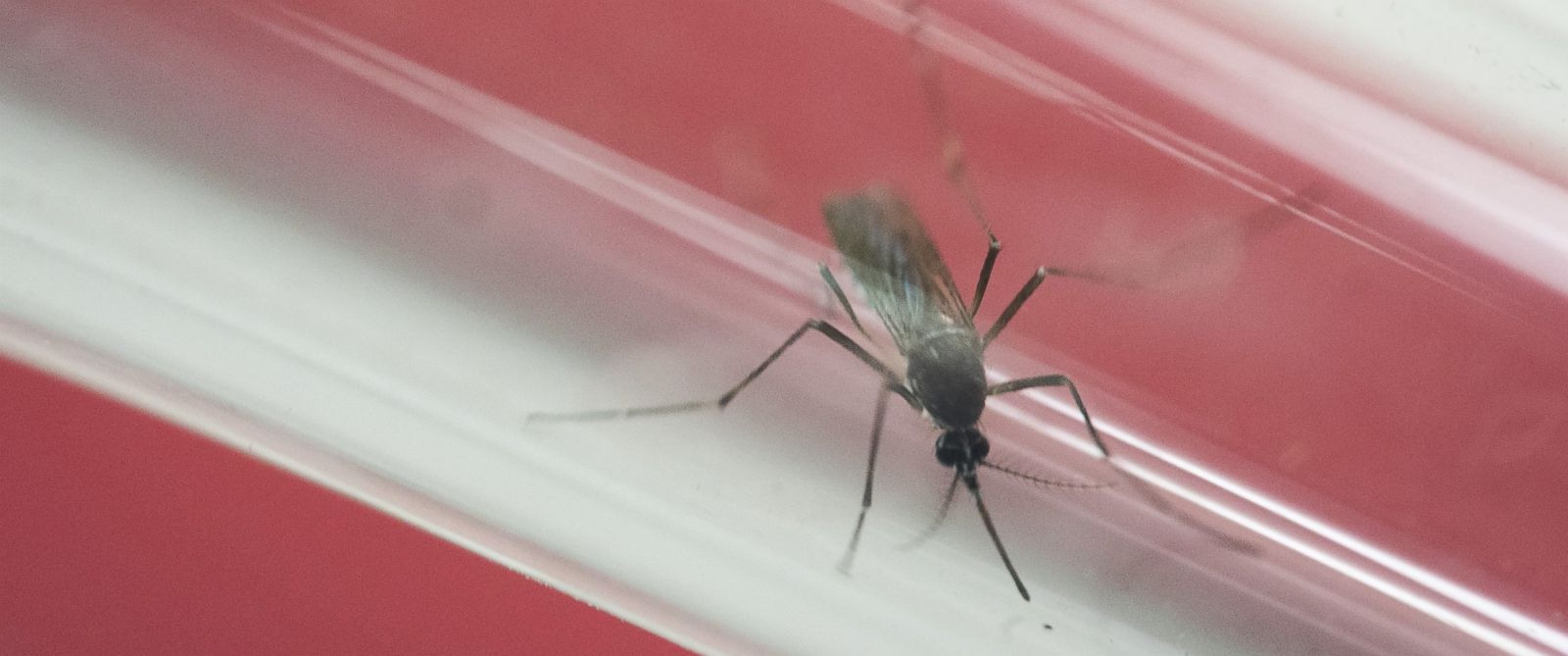
Zika is spread mainly through the bite of a tropical mosquito, Aedes aegypti. It causes only a mild and brief illness, at worst, in most people. But it can cause fetal deaths and severe birth defects in the children of women infected during pregnancy.
Zika has become epidemic in Latin America and the Caribbean since last fall. Officials aren't expecting big outbreaks in the continental U.S., but some cases are likely as temperatures rise and mosquitoes spread.